Showing posts with label Water Storage. Show all posts

Monday, February 3, 2014

Water Storage

One of the more difficult aspects of storing water is figuring out what to store it in. We are going to list a few options that we have found, including some pros and cons of each, though they are not the only options available. A good point to consider is that optimal storing conditions for water are cool, dark places. Also, if you fill the containers with unfiltered water and you want it to last, the water should be treated with bleach or iodine before sealing the container.

First, the Water Barrel

  • This is one of the most well-known option for storing large amounts of water. If water is stored correctly in the water barrels, then it can last indefinitely. You can find water barrels ranging from a 5 to 500 gallon capacity, and the cost depends on the size of the barrel. For example, a 55-gallon barrel ranges from $60-$100, depending on shipping and accessories that are included with the barrel. With barrels it is vital to have a way to extract the water, either by pump or siphon, and some water barrel packages come with included pumps or hoses. While barrels can store a high quantity of water, one of it's disadvantages is that they aren't portable, and you have to have all the water stored in only one place. If you do use barrels, be sure you know where you will store them, and have a way to fill them up at that location, as a full 55-gallon barrel will weigh several hundred pounds and be nigh impossible to move. 

30-Gallon Water Barrel


Boxes with Mylar Bags

  • Another way to store water is in a combination Mylar bag/cardboard box. These kits come with a set of cardboard boxes and Mylar bags that you have to assemble and fill yourself. This option has several advantages, including portability, stackability, and cost. These boxed water kits are available from Emergency Essentials and come in 25-gallon or 100-gallon kits. They cost about $1.25 per gallon depending on which kit you choose. The downside to this option is the effort required to put together the boxes and fill them, and they are somewhat less durable than a barrel or 5-gallon bottle. However, since each box only holds 5 gallons, you can be much more versatile in where you store them, as you can easily store some in a closet and others in another room entirely. When stored correctly, the water will stay good indefinitely. 


5-Gallon Refill Water Bottles
  • These bottles are good for their portability, and they are more durable than the boxed water. However, they cannot be stacked on top of each other, thereby taking up more space, and because they are the "refillable" bottles, the water does not stay good forever. You will need to refill the water every 6 months to 2 years, depending on how it's stored and how the bottle is sealed. Another benefit of using these bottles is that they can either be delivered to your door already filled up (but for a higher cost), or you can refill them yourselves with your sink water or at the refill stations that are in various locations around town.


The Do-it-Yourself: Soda or Juice Containers

  • This is probably one of the most cost-effective forms of water storage. If you ever buy soda or juice, you can clean out the empty bottles and fill them with water from your sink or fridge. Because these are not sealed and the water is not treated with a purifying agent, these should be rotated every 6 months. You can simply write the month that they need to be changed out on the bottle, then in that month just use the water for drinking or watering a garden and refill it so it's ready for another 6 months. This method is cheaper, but the water does not last as long and they usually cannot be stacked, meaning they will take up more space. However, because they are smaller, they do not have to be stored in just one place in the house. Glass bottles can be used, but because they can break so easily it is not recommended. One very important note to remember: Milk jugs/cartons are not good for water storage (unfortunately). The type of plastic that the jugs are made of is not as durable as soda and juice bottles, and the plastic will break down and leak into the water and the water will eventually leak out of he container. Also, the milk proteins are retained in the biodegradable plastic and are not easily washed out. So even though it may be tempting to use milk containers because they are usually more readily available, it will not work for water storage. 


Store-Bought Water Bottles

  • When store-bought water bottles remain sealed and are stored correctly, they can last indefinitely. However, this does depend on the type of plastic the bottle is made of. The best option is to use the bottles made from PET/PETE plastic (For more information on PETE, click here). Store-bought water bottles are beneficial because they are very portable, even in the 24 bottle cases, and they can also be stacked effectively when they are still in the cases. A 24-pack of water bottles can be found as cheap as $5 to $10, depending on the store and the current sales. The biggest downside is the small amount of water in each bottle, as it would take multiple bottles to have enough water to cook a large meal of rice, beans, or pasta.


One last point to consider is that some may think "If I have a water filter, then I don't need to actually store water." The only scenario where this would perhaps work is if you have a lake or creek in your back yard. Since we live in a city in the desert, that's not the case for us, and the stake has specifically asked us to store at least ten days of water so we can have it on hand and ready to use in case we lose access to our normal water supply.


Also, so you can all put it on your calendars, the Lubbock Preparedness Fair will be happening on March 29th, 2013 from 10 a.m. to 3 p.m. We hope you can all come and learn something that will help you in your temporal preparation.


Up for discussion: What are your preferred methods for storing water? Do you have a preferred option that we didn't talk about here?

Sunday, January 26, 2014

Next Goal: 30 Days of Food Storage, 10 Days of Water Storage

Well as most of you know, the next goal for ward and stake preparedness is to get everyone to have a 30 day supply of food storage and  a 10 day supply of water (I will sometimes refer to this as your 30/10 supply). How much is that really? Honestly, it depends on each family and each person's needs within the family, but the main thing to remember is to have enough food and water for three meals per person per day. As we have said before, each person needs about a gallon of water per day, and that's only going to give you enough water to drink and prepare food and doesn't count cleaning dishes, clothes, bodies, or any other uses for water. But for the sake of eating and drinking, each person will need to prepare 10 gallons of water and 90 meals. While that may sound like a lot at first glance, especially for those with larger families or limited storage space, there are ways it can be done. Here are some principles to keep in mind while starting up your 30/10 supply:

  • This is only a 30 day storage, not a 30 year storage. Store non-perishable foods that you eat on a daily basis, not buckets of wheat and dried beans. While those are excellent long-term storage items, we're just focusing on a 30 day supply right now.
  • Find a way to store water that works for you and your family
    • We will do another post soon regarding different options for storing water in your house that go beyond 72-hour kit water storage (for a reference, go to this link to see our 72-hour kit water post).
  • Start with small steps; for those who find 30 days of food storage daunting, start by buying one extra of whatever you normally purchase at the store (for example, if you normally buy 3 cans of green beans, buy 4 and set the extra one aside).
  • Once you have your 30 days of food storage, rotate through it. Since these are supposed to be foods that you normally eat anyway, this shouldn't be more difficult than simply remembering to do so.
  • Be creative in your storage space - don't feel like you have to be limited to a designated "storage room."
    • We will likely do a post on this as well, but for now, try to think of every open space in your home, and see how you can best utilize it - you will be surprised at how much space your home has when you really look for it.
  • Just because this is a more temporal goal, don't forget to bring God into the equation. If' you're worried about anything, such as figuring out how to store water, finding storage space, or having the means to obtain your 30/10 supply, bring your worries to the Lord and he will help prepare a way for you to accomplish the things he commands you to do (1 Ne. 3:7).
I hope this goal becomes a time of spiritual growth for everyone as we seek to obey the commandments of the Lord. We will continue to do more posts on creating your 30/10 supply, and if any of you have any questions about it, please don't hesitate to contact us.

Monday, July 1, 2013

Water Purifiers for 72-Hour Kits

Now water filters should not replace your 72-hour supply of water - you should still have already drinkable water in your kit. Filters are more often for the purpose of an emergency that lasts more than 3 days, when something happens to your normal drinking water supply that requires it to be filtered. There are many options for water filters or purifiers, and the more sophisticated the filter the more expensive it will be. Here we'll just discuss a couple ways of purifying your water that are quicker and easier for a 72-hour kit:

 One option for a water filter that is not as expensive is the LifeStraw water filter found on Amazon (http://www.amazon.com/Vestergaard-Frandsen-LifeStraw-Personal-Water-Filter/dp/B006QF3TW4/ref=sr_1_6?ie=UTF8&qid=1372210582&sr=8-6&keywords=water+purifier). It's about $20, but it doesn't require any preparation, which may be extremely beneficial for those with small children who don't know how to work water filters. Just instruct them to only drink water from the straw and they should be okay.


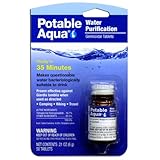
Also, other items to consider are water purification tablets. Each tablet allows you to purify one pint of water, and it only takes 30-35 minutes. On Amazon.com, you can buy a bottle of 50 tablets for only $6.50. (http://www.amazon.com/Potable-Aqua-Water-Treatment-Tablets/dp/B001949TKS/ref=sr_1_1?ie=UTF8&qid=1372642942&sr=8-1&keywords=water+purification+tablets) They are fairly inexpensive, but one thing to consider is that you will need to find a way to measure your water so you have the right proportions.

Product Details


We will discuss other water filters/purifiers after we have finished our segment on the 72-hour kits, but hopefully these two can give you an idea of some items that may be nice to add to your kit. Good luck on continuing to add the water and other liquids to your kits!

Tuesday, June 25, 2013

72-Hour Kit Water

Sorry about the delay in posting, but with the combination of traveling and hectic work days, this post had to be just a tad late. But now we can move on to water - the most important item of a 72-hour kit. You can survive for a while without food, but with no liquids coming into your body, you won't last very long.

So for the next two weeks (technically from June 23 to July 6) we want everyone to focus on obtaining 3 days' worth of water for each member of the family.

There are multiple resources for water, and you may not want to choose just one. For starters, there is the simple water bottle, which you can buy a 24 to 30 pack of water bottles at Wal-Mart or some other store for $4.00. What's nice about these is they're not hard plastic, so they can be slightly molded or squeezed into tight fits. This means that if you are squishing and smashing them they will have to be rotated pretty often (we suggest every 6 months), but since much of the food needs to be rotated as well, then it wouldn't be any more difficult.

Another option is canned water. This makes the water container more durable, but unfortunately it weighs more and takes up more space since it can't change shape at all. It also has a longer shelf life in a can, which can go up to 30 years. It is also pricier, with the exact numbers depending on where you buy it. Also, the canned water would require a can opener for your 72-hour kit - not necessarily a bad thing, but another factor to consider.


Finally there are water pouches. Many who sell these say it's best to use the water within five years, so the shelf life is medium. They are much lighter and easier to fit in small places, but again, even though the pouch is pretty durable, it can still be pierced or ripped in the right circumstances. Emergency Essentials will sell a 4 oz. pouch for 35 cents each, so the price is very doable.


Another option for liquids is to actually use something other than water. Options like Gatorade or Capri Sun are good to add flavor and sugar to a 72-hour kit. Sports drinks like Gatorade and Powerade are especially good because they can replace the electrolytes and other minerals your body loses throughout the day. A 12 pack of Gatorade can be found in Wal-Mart for only $6.00, and often Powerade can be even cheaper.


There is also the option of water purifiers. These can be very handy in an emergency situation, and there are multiple ways to add it to your 72-hour kit. However, we do not want to overwhelm you with information at the moment, so we will wait to add a separate post about water purifiers at the beginning of next week (which will still be the middle of the allotted time for gathering water). So until then, good luck on collecting your water, and let us know any questions or ideas you have!


Do any of you have specific preferences for how you add water to your 72-hour kits? Feel free to discuss!